Author Archives: riseandshinerabbitry
BREEDING RABBITS BY THE MOON

Full moon view at the rabbitry
How did breeding rabbits or other farm animals get tied in with the phases of the moon?
Is this hillbilly folklore or fact? And where did this concept of breeding by moon phases actually come from? These are some of the questions I will try to answer.
The moon has played a huge role in Witchcraft, Greek mythology, Native American stories and Roman mythology throughout history. Both the Greek goddess Selene and the Roman goddess Luna had the moon under their control and human fertility in their power. Today many couples struggling with fertility will try to conceive by the various phases of the moon.
Hunters will hunt deer based on phases of the moon. Fishermen fish at different times of the moons cycle. Even worms breed by the phases of the moon (I see this all the time in my worm beds and the night crawlers in the pasture).
Gardening is often done on moon phases (something else I practice). Considering the mythological role the moon has played in history it is no surprise that rabbits can be bred by phases of the moon. The moon phases do make sense when you think about it…rabbits are nocturnal to begin with and the moon phases have a lot to do with fish and bird migrations, tides, and other wildlife events.
At the local hospitals they swear that the full moon brings out more “weird” cases also talking to the local police and fire/EMT people they say the same thing .
Back about twenty years ago I started to get nothing but bucks out of a few of some really good does. Wanting to save some does out of their litters for replacement breeders, I tried different ideas, different feed, Apple Cider Vinegar treatment (which I now do all the time), and nothing worked I still got bucks.
So I talked to a few old timers and they told me to try to breed on the new moon for more does. They bred horses this way and they swore by it, so I gave it a shot. Low and behold 6 does and 2 bucks in both litters and ever since I have tried to breed by new or full moon with great results. Not 100% successful but you will see that’s there is a definite result! Hillbilly folklore I think not!
I have herd of bad results of breeders that bred on a lunar eclipse on a full moon resulting in unusual amounts of kits born small. Some does that were proven good mothers scattered litters on the cage floor for the first time ever. Some does had difficult deliveries (again proven does) and entire litters were born dead.
I did some research myself and in over 300 individual litters showed that rabbits bred during a full moon phase or waxing had MORE kits, than rabbits bred during a new moon or waning stage. During that research I did not keep track of the sexes (wish I had- kicking my self in the behind) just the litter size. I have been recently keeping track and have had some good results, a lot of breeders think I am crazy to believe this system, but it work for me! So keep track and tell me how you make out!
A way to identify a Waxing or Waning Moon is to look at which side is “incomplete”. When the Moon is illuminated in such a way that the side facing West is “incomplete” the Moon is Waning (getting smaller) newer. If the side to the East is “incomplete” the Moon is Waxing (getting bigger) fuller
How it Works- Two things come into play when breeding by the phases of the moon. The first is whether there is a new moon or a full moon. Breeding during a new moon increases the number of does in a litter. Breeding by a full moon increases the number of bucks in a litter.(This I have recently kept track of and have had good results!)
The second thing that comes into play is the zodiac signs. The various signs either produce good, poor or best quality of the bucks or does. For example does bred during Aries, Gemini and Sagittarius have a tendency to produce poor quality bucks according to the theory. When you combine the moon phases with the zodiac signs you then can breed for specific results. So if a New Moon occurs during a zodiac time that produces the best does that when you should breed for does. Like if a New Moon occurred on July 17, which is during the zodiac sign Cancer that would be a great time to breed for does, because the New Moon produces the most does and Cancer produces the best does.
Some breeders also claim that breeding a hard-to-breed doe on a full moon will always be a successful one. Adding to that their are breeder who claim that there are particular moon phases during the year that will result in the best quality of animals, or also to increase hardiness.
I hope this post sparks some interest for people to keep track and let me know your results good or bad. Join The Rabbit Revolution! and subscribe to this blog page to keep updated when we have new posts.
SAFE FOOD LIST FOR RABBITS
Safe Food for Rabbits-
This is as comprehensive a list as I can come up with, I may have left a few things out and would be happy to hear from you, i will add them and will post comments to this page! The names given are the common names, and I’ve given all the ones I know. However it is not a guide to the nutritional value of these foods and as always when starting rabbits on a natural feeding program go slow so the gut flora can adapt to the new feeds you are feeding your rabbits.
RABBIT SAFE FRUIT-
(Feed very, very sparingly… Super sugary! Up to 2 tbsp daily) :
Apple (NO core or anything containing seeds, unless all seeds removed)
Apricots (NO PITS)
Banana (fruit and peel)
Blackberry (stem, leaf and fruit)
Blueberries
Carambola
Cherry (NO PITS)
Cranberry
Currant (black and red)
Cucumber
Grapes (fruit, leaf and vine are edible)
Huckleberry
Kiwi Fruit
Mango
Nectarine
Orange (NO PEEL- segments only)
Melon (all melons)
Papaya (NO SEEDS)
Peach (NO PITS)
Pear
Pineapple
Plum (NO PITS)
Raspberries (twigs, and leaves – astringent)
Rose hip
Starfruit
Strawberries (and leaves)
Tomato (red fruit ONLY; no stems or leaves)
Tangerine (NO PEEL – segments only)
Watermelon
RABBIT SAFE VEGETABLES-
Alfalfa Sprouts
Artichoke Leaves
Arugula
Asparagus
Baby Sweet Corns (like in stirfry)***
Beet Greens
Beetroot
Bell Peppers (green, yellow, red, orange…)
Bok Choy/Pak Choy
Carrot Greens (tops)
Carrot (limited amount, due to high sugar content)
Celeriac
Celery (cut into small pieces to limit choking on strings)
Cucumber
Chard
Chicory Greens (aka Italian Dandelion… see discussion here )
Clover (WHITE only)
Collard Greens (be cautious, may cause bladder sludge (high calcium)
Dandelion Greens (no pesticides)
Eggplant (purple fruit only; leaves toxic)
Endive
Escarole
Grass (if cut from your own chemical/fertilizer/poison free back yard-I spread it out and dry it)
Kale
Lettuce (Dark Green/Red Leaf, Butter, Boston, Bibb, or Romaine – NO ICEBERG [no
nutritional value, may cause diarrhea])
Mustard Spinach
Nappa/Chinese Cabbage
Okra Leaves
Pak Choy/Bok Choy
Pumpkin
Radicchio
Radish tops (Limited amounts: can cause gas)
Raspberry Leaves
Rhubarb (RED STALKS ONLY – POISONOUS LEAF)
Squash: Yellow, Butternut, Pumpkin, Zucchini
Swiss Chard
Turnip Greens
Watercress
Wheat Grass
Zucchini
SAFE IN MODERATION:
Broccoli
Brussels Sprouts
Cabbage
Cauliflower
Kale
Mustard Greens
Spinach
SAFE FOODS:
Agrimony
Alfalfa
Apple
Avens
Balm
Banana
Barley
Basil
Beetroot
Blackberry
Borage
Broccoli
Buckwheat
Burnet
Camomile
Caraway
Carrot
Celery
Celeriac
Chervil
Chicory
Chickweed
Chinese leaf
Cleavers
Clover, WHITE
Coltsfoot
Comfrey-I feed fresh young leaves and also dry for winter tonic, but most breeders say they feed it slighty wilted
Coriander
Corn marigold
Corn spurrey
Cow parsnip
Crosswort
Cucumber
Dandelion
Dead-Nettles
Dill
Dock BEFORE FLOWERING
Endive
Fat hen
Fennel
Goosefoot
Goosegrass
Goutweed BEFORE FLOWERING
Ground elder BEFORE FLOWERING
Hawkbit
Hawkweed
Heather
Hedge parsley
Horseradish
Jerusalem artichoke
Knapweed
Knotgrass
Kohlrabi
Lavender
Lovage
Mallow
Marjoram
Mayweed
Maywort
Meadowsweet
Melon
Milk thistle
Mugwort
Nipplewort
Oats
Orache
Oxeye daisy
Parsley
Parsnip
Peas
Pear
Peppermint
Pigweed
Plantain
Pumpkin
Purslane
Radish GREENS
Raspberry
Sage
Savory
Sanfoin
Shepherd’s purse
Silverweed
Sow thistle
Soya
Strawberry
Swiss Chard
Tare
Tomatoes(fruit only leaves and stocks toxic!)
Trefoil
Vetch
Vine leaves
Watercress
Watermelon
Wheat
Yarrow
SAFE TREE AND SHRUB LEAVES-Should always feed only fresh young leaves:
Acacia
Apple
Beech
Birch
Blackberry
Cherry
Hazel
Horse Chestnut
Lime
Mountain Ash
Mulberry
Pear
Poplar (not black)
Raspberry
Strawberry
SAFE TWIGS-
Apple
Birch
Blackberry
Fir
Hazel
Hawthorn
Maple
Pear
Raspberry
Spruce
Willow
SAFE FLOWERS-
Aster
Daisy
Geranium
Geum
Helenium
Hollyhock
Honesty
Marguerite
Marigold
Michaelmas daisy
Nasturtium
Rose
Stock
Sunflower
SAFE HERBS-
Basil: Lemon, Globe, Thai, Mammoth, Sweet, Genevieve
Borage
Camomile
Caraway
Clover
Chervil
Comfrey
Coriander/Cilantro
Dill: Fernleaf, Mammoth
Fennel
Garden Cress
Groundsel
Lavender (Not for pregnant does; can cause fetal expulsion)
Lemon Balm
Lovage
Marjoram
Mint: Pineapple sage, pineapple mint, apple mint, orange mint, peppermint, lemon thyme, cinnamon basil, lime basil, lemon basil, sweet basil, licorice basil, “licorice mint” (anise hyssop), spearmint, peppermint, chocolate mint, and basil mint.
Oregano
Peppermint
Parsley: Curly and Flat-Leaf
Rosemary
Sage: Pineapple is quite good
Salad Burnet / Small Burnet
Summer Savory
Tarragon
Thyme
WINTER CARE FOR RABBITS
 Winter is now approaching and so the issue of raising rabbits in cold weather is on many rabbit breeders minds. As with any livestock on the homestead winter can present many challenges in the proper care of these animals. Rabbits are very adaptable to cold temperatures much more than the heat. Cold weather will invigorate your rabbits and bring out their natural playfulness. Temperatures below freezing for extended periods of time and strong winds that lower the wind chill temps can be a problem for newborn or young rabbits.
Make shure that the location of your rabbitry, be it in a barn, shed or hutches should be located in a sheltered area. This will be some added protection from the wind, especially north winds. It should have a roof of some kind and, depending on the kind of shelter, will need protection on the sides. Wooden hutches with wire bottoms and wire fronts are great for cold weather because they offer protection on the top and three sides. For maximum storm protection, a heavy canvas cover can be made for the front of the cage that will be rolled up during nice weather, but that can be put into place during wind, storms, and at night.
Rabbits can withstand very low temps as long as they can remain dry and find insulation from the cold to conserve body heat (using a nest-box full of straw or putting large amounts of bedding in their cages). Most meat breeds of rabbits have a thick coat which is a exceptional insulator against the weather, but if water reaches their skin they will be unable to stay warm. The key to winter housing for rabbits is to avoid the drafts and swirls of winter air which can stress your rabbits and reduce their natural immune system. Your rabbits MUST stay dry.
If you have no enclosed rabbit barn, plastic sheeting should be stapled to the back and sides or temporary wood sides and backs should be used. You must remember to cover, close to the ground to prevent updrafts into the cage but leave some space for the rabbit to get fresh air, stale humid air is very unhealthy for rabbits. It is important not to completely block ventilation in you rabbit barn, shed, or hutchs. Ventilation in the rabbitry is just as important in the winter as it is in the summer. Insulating a barn for the winter will help keep the barn a little warmer. A balance between shelter and ventilation is important!
I have had over 25 cages/hutches outside they have a roof over them and have the back covered. In the winter I cover the sides and bottom of the front of cage with heavy plastic. I leave a gap at the very top and bottom for airflow and in bad weather will put a roll down cover in the front, sometimes in really bad weather I will also fill a nest-box with straw and put in the cage for the rabbit to keep warm. This would be similar to a wild rabbit going into its den during extreme cold. I have also made some “ARTIC WEATHER CAGES” that I only use in the winter that has three sides covered with plywood and the bottom front with plastic. I have the sides and back walls double thickness with foam insulation between the plywood. I have had litters in these all winter long with never any problems with no additional heat!
In my own experience young rabbits seem to grow better and have less health problems in cool or cold weather (They do grow slower in the winter). Most other rabbit breeders tell me that litters can’t be born outdoors when the temperature is below freezing. Well, here in Maine, my doe’s haven’t heard about that (don’t tell them either!), and produce young year round, freezing weather or not.
As long as plenty of nesting material is provided and the mother covers her babies with fur, the bunnies won’t freeze. The nesting material I’ve found most suitable for winter use is wood shavings and straw, which mix well with the fur and can be burrowed into for warmth. One reason I don’t have problems with does losing litters to cold weather is that I cull any female that doesn’t pull out enough hair to make a good nest. We’ve been raising rabbits for about 30 years and have lost an occasional kit in the winter but never an entire litter. By observing your rabbits and culling you can make your bloodline do what you want.
I have only had problems with rabbits in the cold when the kits clung on to their mothers teat and got pulled out of the nest-box and into the cold after nursing.
It gets cold here some times -12 to as low as -20. I have heard from other breeders in cold climates and they also breed all winter long. I have also made some insulated closed nest boxes that work great in the outside hutches but you got to keep the bedding clean and dry if wet it will freeze and freeze the kits so more management is needed. I have seen some really good ideas people have come up with Christmas tree lights in nest-boxes, lights under the nest-box, heat lights above the boxes, commercial nest-box warmers (I refuse to use bought power to raise rabbits, unless I make it here with the wind and sun. I am working on methane production next).
My rabbits are all receptive to breed in the winter without added lights or heat (selective breeding for your area works awsome) but if you have problems breeding your rabbits in the winter try running lights to extend the light period for 14 to 16 hours a day (you could rig up some of the solar path lights). Breeding through the winter can present problems, kits are born without fur the doe compensates for this by pulling lots of fur and covering the kits.
I use my wooden nest boxes lined with cardboard. I put a inch of shavings on the base of the nest-box and cover with another layer of cardbord. By sandwiching the shavings between 2 layers of cardboard to keep the floor of the box insulated.I also line the sides with cardbord. I have seen breeders that take the nest-boxes into the house put the does name or number on the box and then bring the boxes back to the does cages 1 or 2 times a day to let her feed her kits with great results, you usally only need to worry for the first 2 weeks then the kits get enough fur to survive the cold temperatures and will often huddle together for added warmth then you can leave the boxes in with the does.
WATER- Is the main concern in the winter because of frozen water crocks. I use water bottles all the time except in the winter I switch over to metal crocks (metal does not crack due to the expanding ice). Some breeders still use bottles and have spares to swap out the frozen bottles. I Have found that the metal tubes freeze to quickly and the water in the bottles will still not be frozen but the water is not available to the rabbits because of the frozen tube. The metal crocks are easier to thaw out than plastic or glass, it takes a 5 gallon bucket of hot water to thaw all of my crocks. I drop a few crocks in the hot water and the ice pops out, I put the ice in a separate bucket to make the hot water last longer. Some people use hammers to smash out the ice or just have spare crocks. Your diligence in making sure they have fresh water greatly increases their comfort level and chances of survival. Rabbits will not eat if there is no water available they need the food calories to keep warm. You should make sure to provide fresh ice free water at least 2 times a day once in the morning and again in the evening ,preferably more often if you can.
FEED- It takes more energy for a rabbit to keep warm they are burning more calories during frigid temperatures trying to generate more body heat. Hay and feed should be slightly increased as they will need the extra calories in the winter to maintain their body weight. It is important not to overfeed! Feed to maintain their body weight. Rabbits that gain weight in the winter will not breed and if you do not breed in the winter they will have problems breeding in the following spring. I have some friends in Alaska that feed a condition mix in the winter (2/3 crimped oats,1/3 crimped barley plus a few black sunflower seeds) to keep them maintained at the proper body weight. My winter herbal hay mix that I make up (will do a post on this in the spring) has dry basil leaves added, this herb acts as a warming and uplifting tonic for nervous rabbits or added benefit in any cold conditions.
HEALTH- A rabbits body temperature is 101.5 to 103 degree Fahrenheit. When their body temperature drops below 100 degrees rectal temp it must be warmed up immediately or hypothermia will set in and kill the rabbit. The way to warm a rabbit depends on the severity of hypothermia. Mild hypothermia is when the temps get to 86-89 degrees-Treatment would be packing the rabbit between warm water bottles wrapped in a towels until body temp returns to normal. Warming the rabbit to quickly will put the rabbit in shock. Moderate hypothermia 71 to 77 degrees and Severe hypothermia 32 to 47 degrees rectal temperature. Begin treatment by bringing rabbit into a heated room and allow to warm naturally and then use the water bottles as recommended for mild hypothermia to get the rabbit back to normal body temp. Avoid rubbing the rabbit as this can increase the flow of cold blood into the core of the body increasing the depth of hypothermia. If the core body heat is lost the rabbit will enter a kind of suspended animation were the normal body functions slow down. In many cases,the animal will survive if you follow the procedures as listed. I have never had a case of hypothermia in any of my rabbits.
If you take care to feed and water your rabbits no matter how bad the weather is! (it is up to you to take the responsibility to care for your herd) Your rabbits will handle the winter weather fine. Keep an old towel on hand to dry your rabbits if they get wet from unexpected winter storms. I have never lost any rabbit in the winter other than the young kits that have been dragged out of the nest box when nursing.
Cold weather can be deadly for any animal, but with a few precautions and your rabbit’s naturally well-insulated body, the animal can live warm and comfortable in even the coldest climates. Rabbits survive in the wild further north than most other animals, but your rabbits relie on you to give it the benifits that allow their wild ancesters to live throughout the year.
Hope this answers any of your winter rabbit needs. If any questions or other good ideas feel free to post in the comment section or email me! riseandshinerabbitry@hotmail.com
Join The Rabbit Revolution! By liking us on Facebook to receive daily rabbit tips, tricks, and ideas! Also subscribe to the blog via email and receive updates as the new post are put up.
Raising Meat Rabbits To Save The World!
POISONOUS PLANTS TO RABBITS
Many plants listed here are not all poisonous, only parts of them are. Apple is a good example: the seeds are poisonous, but the fruit is perfectly fine for rabbits. Read the complete listing of the plant to get details regarding which parts to avoid. If no parts are listed, assume that the whole plant is poisonous and should not be in fed to your rabbit.
Acokanthera (Acokanthera)-fruit, flowers very poisonous
Aconite (Aconitum)-all parts very poisonous
African rue (Peganum harmala)
Agapanthus (Nerine bowdenii)
Aloe vera (Aloe vera)
Alsike clover (Trifolium hybridum)
Amanita (Amanita)-all parts
Amaryllis (Hippeastrum)-bulbs
Amaryllis belladonna (Brunsvigia rosea)-bulbs
Anemone (Anemone sp.)
Angel trumpet tree (Datura, Brugmansia arborea)-flowers, leaves, seeds
Anthurium (Anthurium)
Apple (Malus sylvestris)-seeds contain cyanide
Apple leaf croton (Codiaeum variegatum)
Apricot (Prunus armeniaca)-pits contain cyanide
Arrowgrass (Triglochin sp.)
Arrowhead vine (Syngormon podophyllum)-oxalates
Asparagus fern (Asparagus sprengeri)
Atropa belladonna (Atropa belladonna)-all parts, esp. black berries
Autumn crocus (Colchicum autumnale)-corms
Avocado (Persea americana)
Azalea (Rhododendron occidentale)-all parts fatal
B
Baccharis (Baccharis sp.)
Balsam (Impatiens balsamina)-whole plant
Balsam pear-seeds, outer rind of fruit
Baneberry (Actaea alba, rubra, spicata)-berries, roots, foliage
Beach pea (Lathyrus maritimus)
Beargrass (Nolina texana)
Beefsteak plant (Perilla frutescens)
Begonia (sand)
Belladonna, Atropa (Atropa belladonna)-all parts, esp. black berries
Belladonna lily (Brunsvigia rosea)-bulbs
Betel nut palm (Areca catechu)-all parts
Bird of paradise (Strelitzia poinciana)-seeds
Bird of paradise bush (Casesalpinia gilliesii)-seeds, pods
Bittersweet (Celastrus, dulcamera)-berries
Bitterweed (Hymenoxys odorata)
Black henbane (Hyoscyamus niger)
Black locust (Robinia pseudoacacia)-bark, sprouts, foliage
Black nightshade (Solanum nigrum)-leaves, berries
Black root
Bladderpod (Sesbania vesicarium)
Bleeding heart (Dicentra)-foliage, roots
Bloodroot (Sanguinaria canadensis)
Bluebonnet (Lupinus spp.)-all parts
Blue cohosh (Caulophyllum thalictroides)
Blue-green algae-some forms toxic
Bog Kalmia (Kalmia)
Boston ivy (Parthenocissus tricuspidata)
Bottlebrush (Callistemon)-flowers
Boxwood (Buxus sp.)-all parts
Bracken fern (Pteridium aquilinum)
Branching ivy (Hedera helix-Weber’s California)-all parts
Broomcorn (Sorghum vulgare)
Broomweed (Gutierrezia microcephala)
Buckeye (Aesculus)-sprouts, nuts
Buckthorn (Amsinckia intermedia)-fruit, bark
Bull nettle
Bunchberry (Cornus canadensis)
Burroweed (Haplopappus heterophyllus)
Buttercup (Ranunculus sp.)-all parts
Butterfly weed (Asclepias tuberosa)
C
Cactus thorn
Caesalpinia (Poinciana)-seeds, pods
Caladium (Caladium portulanum)-all parts
Calico bush (Kalmia latifolia)-young leaves, shoots are fatal
California fern (Conium maculatum)-all parts are fatal
California geranium (Senecio petasitis)-whole plant
California holly (Heteromeles arbutifolia)-leaves
Calla lily (Zantedeschia aethiopiea, Calla palustris)-all Parts
Candelabra cactus
Cardinal flower (Lobelia cardinalis)-all parts
Carnation (Dianthus caryophyllus)-all parts
Carolina jessamine (Gelsemium)-whole plant
Carolina Laurel Cherry (Prunus caroliana)-all parts
Casava (Euphorbiacea)-roots, sap
Cassine (Ilex vomitoria)-berries
Castor bean (Ricinus communis)-seeds are fatal, leaves
Century plant (Agave americana)
Ceriman (Monstera deliciosa)
Chalice vine-all parts
Cherries, wild and cultivated-twigs and foliage are fatal, bark, pits
Cherry, Jerusalem (Solanium nigrum/eleagnifolium/ pseudocapsicum)-fruits, leaves
Cherry laurel (Prunus var.)-all parts are fatal
Cherry, Natal (Solamon)-berries
Chestnut, Horse (Aesculus)-all parts
Chinaberry tree (Melia azedarach)-berries
Chokecherry (Prunus serotina)-withered leaves
Christmas berry (Heteromeles arbutifolia)-leaves
Christmas candle-sap
Christmas rose (Helleborus niger)-all parts, esp. leaves
Cineraria (Senecio hybridus)-whole plant
Clematis (Clematis)
Cloak fern (Notholaena sinuata var cochisensis)
Clover, Alsike (Trifolium hybridum)
Cocklebur (Xanthium sp.)
Coffeebean (Sesbania drummondii)
Cohosh (Caulophyllum thalictroides)
Colorado rubberweed (Hymenoxys richardsonii)
Columbine (Aquilegia)-all parts
Common privet (Ligustrum)-all parts
Coral berry (Symphoricarpos orbiculatus)-seeds
Coral plant (Symphoricarpos orbiculatus)-seeds
Cordatum (Philodendron oxycardium)
Corn cockle (Agrostemma githago)
Corn lily (Symplocarpus foetidus)-all parts
Corn plant (Dracaena fragrans massangeana)
Cotoneaster (Cotoneaster)
Covotillo (Karwinskia humboldtiana)-berries
Cowslip (Caltha palustris)
Crab’s eye (Abrus precatorius)-seeds are fatal
Creeping charlie, except houseplant (Glecoma, Nepeta hederacea)
Cress/Crucifers/Mustards (Cruciferae-Brassica Raphanus, Descurainia spp.)
Crocus (Crocus)-corms
Crocus, Autumn (Colchicum autumnale)-corms
Croton (Codiaeum variegatum, Euphorbiacea)
Crown-of-thorns (Euphorbia milli)-leaves, flowers
Crown vetch (Astragalus sp.)-all parts
Crow poison (Amianthium muscaetoxicum)
Crucifers/Cress/Mustards (Cruciferae-Brassica, Raphanus, Descurainia spp.)
Cuban laurel (Ficus spp.)
Cuckoopint (Arum maculatum)-all parts
Curcas bean-seeds, oil
Cutleaf philodendron (Monstera deliciosa)
Cycads (Cycas spp., Zamia spp.)
Cyclamen (Cyclamen sp.)
D
Daffodil (Narcissus)-bulbs may be fatal
Daisy (Chrysanthemum frutescens)
Daphne (Daphne mezereum)-berries are fatal
Datura (Brugmansia, all species)-all parts
Deadly amanita (Amanita)-all parts
Deadly nightshade (Solanum nigrum)-all parts, unripe fruit, foliage
Death-camas (Sygodenus venesii, Zygadenus nuttallii)-all parts poisonous, roots fatal
Death cup (Amanita phalloides)-all parts
Delphinium (Delphinium sp.)-all parts
Desert tobacco
Destroying angel (Amanita phalloides)-all parts
Devil’s ivy (Scindapsus aureus, Epipremnum aureum)
Devil’s tomato (Solanum eleagnifolium)-all parts
Dianthus (Dianthus)-all parts
Dieffenbachia (Dieffenbachia)-all parts, esp. sap
Dogbane (Apocynum sp.)-leaves
Dogwood (Cornus)-fruit slightly poisonous
Doll’s Eyes (Actaea alba, rubra, spicata)-berries, roots, foliage
Dracaena palm (Dracaena sanderiana)
Dragon tree (Dracaena draco)
Drymary (Drymaria pachyphylla)
Dumb cane (Dieffenbachia amoena)-all parts, esp. sap
Durra (Sorghum vulgare)
Dutchman’s breeches (Dicentra)-foliage, roots
Dutchman’s pipe (Aristolochia durior)
E
Eggplant-all parts but fruit
Elaine (Codiaeum elaine)
Elderberry (Sambucus canadensis)-all parts
Elephant’s ear (Colocasia esculenta, Philodendron domesticum, Caladium hortulanum)-all parts
Emerald duke (Philodendron hastatum)
Emerald feather (Asparagus sprengeri)
English ivy (Hedera helix-ilex acid)-all parts
English laurel (Prunus laurocerasus)-all parts are fatal
Euonymus (Euonymus)
Euphorbia (Euphorbia sp.)-leaves, flowers, sap
Evening trumpet (Gelsemium sempervirens)-whole plant
Exotica perfection
Eyebane (Euphorbia maculata)
F
False henbane-all parts
False hellebore (Veratrum viride and other sp.)-all parts poisonous, root deadly
False parsley (Conium maculatum)-all parts are fatal
Fiddle-leaf fig (Ficus lyrata)
Fiddleneck (Amsinckia intermedia)-fruit, bark
Firecracker (Dichelostemma ida-maia)
Firethorn (Pyracantha sp.)
Fireweed (Amsinckia intermedia)-fruit, bark
Florida beauty (Dracaena spp.)
Fluffy ruffles
Fly agaric (Amanita muscaria)-whole plant
Fly poison (Amianthium muscaetoxicum)
Fool’s parsley (Conium maculatum)-all parts are fatal
Four o’clock (Mirabilis jalapa)-whole plant
Foxglove (Digitalis purpurea)-all parts can be fatal
Foxwood
Frijolito (Sophora secundiflora)-all parts
Fruit salad plant (Philodendron pertusum)
G
Garden sorrel (Rumex acetosa)-oxalates
Gelsemium (Gelsemium)-whole plant
Geranium, California (Senecio petasitis)-whole plant
German ivy (Senecio mikanioides)-whole plant
Ghostweed (Euphorbia marginata)-all parts
Giant dumbcane (Dieffenbachia amoena)-all parts, esp. sap
Glacier ivy (Hedera helix Glacier)-all parts
Gladiola (Gladiolus sp.)
Glecoma hederacea (Nepeta hederacea)
Glory lily (Gloriosa sp.)
Goatweed (Hypericum perforatum)
Gold dieffenbachia-all parts, esp. sap
Gold dust dracaena (Dracaena godseffiana)
Goldenchain tree (Laburnum)-seeds, pods may be fatal
Golden pothos (Epipremnum aureus)
Gold-toothed aloe (Aloe nobilis)
Greasewood (Sarcobatus vermiculatus)
Green-gold nephythytis (Syngonium podophyllum xanthophilum)
Ground ivy (Nepeta hederacea)
Groundsel (Crotalaria spp.)
Groundsel (Senecio sp.)-whole plant
Guajillo (Acacia berlandieri)
H
Halogeton (Halogeton glomeratus)
Hawaiian baby wood rose
Heart ivy (Hedera helix)-all parts
Heartleaf (Philodendron cordatum, Philodendron oxycardium)
Heavenly bamboo (Nandina domestica)-leaves
Hedge apples
Hellebore (Ranunculacea, Helleborus, Veratrum)-all parts
Hemlock (Conium, Cicuta, Tsuga)-all parts
Hemp, Indian (Cannabis sativa, Apocynum sp.)-leaves
Henbane, Black (Hyoscyamus niger)-all parts
Hogwort
Holly (Ilex aquifolium, opaca, vomitoria)-leaves, berries
Horsebrush (Tetradymia sp.)
Horsechestnut (Aesculus)-all parts
Horse-head (Philodendron oxycardium)
Horse nettle (Solanum carolinense)-all parts, esp. fruits, leaves
Horsetail reed (Equisetum sp.)-all parts
Hyacinth (Hyacinthus orientalis)-bulbs can be fatal
Hydrangea (Hydrangea macrophylla)-whole plant
I
Impatiens (Impatiens)-whole plant
Indian hemp (Apocynum cannabinum)-leaves
Indian laurel (Ficus retusa nitida)
Indian rubber plant (Ficus elastica Decora)
Indian tobacco (Nicotiana giauca) -all parts
Indian turnip (Arisaema triphyllum)-all parts
Indigo (Indigofera sp.)
Inkberry (Ilex glabra)-leaves, berries
Inkweed (Drymaria pachyphylla)
Iris (Iris sp.)-underground rhizome, leaves
Ivy (Hedera)-all parts
Ivy bush (Kalmia angustifolia)-leaves
J
Jack-in-the-pulpit (Arisaema triphyllum)-all parts
Jamestown weed (Datura, Brugmansia stramomium)-all parts
Jatropha-seeds, oil
Java bean (Phaseolus limensis)-uncooked bean
Jequirity bean (Abrus precatorius)-seeds are fatal
Jerusalem cherry (Solanium nigrum/eleagnifolium/ pseudocapsicum)-fruits, leaves
Jessamine (Gelsemium sempervirens)-flowers, leaves, berries fatal
Jessamine, Carolina (Gelsemium)-flowers, leaves, seeds
Jessamine, Night-blooming (Cestrum nocturnum)
Jimmy fern (Notholaena sinuata var cochisensis)
Jimson weed (Datura, Brugmansia stramomium)-all parts
Johnson grass (Sorghum halepense)
Juniper (Juniperus)-needles, stems, berries
K
Kafir (Sorghum vulgare)
Klamath weed (Hypericum perforatum)
L
Lady slipper (Cypripedium spectabiles)-all parts
Lambkill (Kalmia angustifolia)-leaves
Lantana camara (Lantana camara)-green berries are fatal
Larkspur (Delphinium)-all parts, seeds may be fatal
Laurel, Cherry (Prunus caroliniana)-all parts are fatal
Laurel, Cuban (Ficus spp.)
Laurel, Indian (Ficus retusa nitida)
Lecheguilla (Agave lecheguilla)
Ligustrum (Ligustrum ovalifolium)-all parts
Lily of the valley (Convallaria majalis)-all parts, including water
Lima bean (Phaseolus limensis)-uncooked bean
Lobelia (Lobelia sp.)-all parts
Locoweed (Astragalus sp.)-all parts
Lords-and-ladies (Arum maculatum)-all parts
Lupine (Lupinus)-all parts
M
Machineel-all parts
Madagascar dragon tree (Dracaena marginata)
Majesty (Philodendron hastatum)
Mandrake (Podophyllum pellatum)-all parts
Marble queen (Scindapsus aureus)-oxalates
Marijuana (Cannabis sativa)-all parts
Marsh marigold (Primula veris)
Mayapple (Podophyllum pellatum)-all parts
Medicine plant (Aloe vera)
Mescal (Lophophora williamsii)-cactus tops
Mescal bean (Sophora secundiflora)-all parts
Mesquite (Prosopis glandulosa)
Mexican breadfruit (Monstera deliciosa)
Mexicantes
Milkvetch (Astragalus sp.)-all parts
Milkweed (Asclepias sp.)-all parts
Milo (Sorghum vulgare)
Miniature croton (Punctatis aureus)
Mistletoe (Phoradendron flavescens)-berries are fatal
Moccasin flower (Cypripedium spectabiles)-all parts
Monkshood (Aconitum napellus)-all parts
Moonseed (Menispermum)-berries can be fatal
Morning glory (Ipomoea violacea)-all parts
Mother-in-law (Monstera deliciosa)
Mountain laurel (Kalmia latifolia)-young leaves, shoots are fatal
Mushroom
Mustards/Crucifers/Cress (Cruciferae-Brassica, Raphanus, Descurainia spp.)
N
Narcissus (Narcissus)-bulb can be fatal
Natal cherry (Solamon)-berries
Nephthytis (Syngonium podophyllum albolinea-tum)-oxalates
Needlepoint ivy (Hedera helix Needlepoint)-all parts
Nicotiana (Nicotiana)-wild, cultivated leaves
Night-blooming jessamine (Cestrum nocturnum)
Nightshade (Solanum carolinense)-all parts, esp. fruits, leaves
Nightshade (Solanum eleagnifolium)-all parts
O
Oaks (Quercus)-foliage, acorns
Oleander (Nerium oleander)-foliage, branches, nectar
Orange milkweed (Asclepias tuberosa)
Orange sneezeweed (Helenium hoopesii)
Ornamental tobacco (Nicotiana)-all parts
Oxalis (Oxalis)-oxalates
P
Palma christi (Ricinus communis)-seeds are fatal, leaves
Panda (Philodendron panduraeformae)
Paper flowers (Psilostrophe sp.)
Paradise plant
Parlor ivy (Philodendron elegans, Philodendron cordatum, Philodendron pertusum)
Parsnip (Pastinaca sativa)
Partridge breast (Aloe variegata)
Peach (Prunus persica)-pit contains cyanide
Pear (Pyrus communis)-seeds contains cyanide
Pear, Balsam-seeds, outer rind of fruit
Pencilbush (Euphorbia tirucalli)
Pencil cactus (Euphorbia tirucalli)
Peony (Paeonia sp.)-all parts
Peregrina-seeds, oil
Perill mint (Perilla frutescens)
Periwinkle (Vinca sp.)-whole plant
Peyote (Lophophora williamsii)-cactus tops
Philodendron (Philodendron)-leaves, stem, sap
Philodendron, Cutleaf (Monstera deliciosa)
Pigweed (Amaranthus spp.)-oxalates
Pingue (Hymenoxys richardsonii)
Pinks (Dianthus)-all parts
Plum (Prunus)-seeds contain cyanide
Plumosa fern (Asparagus plumosus)
Poinciana (Poinciana gillesii)-green seeds, pods
Poinsettia (Euphorbia pulcherrima)-leaves, sap are fatal, flowers
Poison hemlock (Conium maculatum)-all parts are fatal
Poison ivy (Rhus radicans)-all parts
Poison nut
Poison oak (Rhus, Toxicodendron diversilobium)-all parts
Poison parsnip (Cicuta maculata)-all parts, esp. root, are fatal
Poison sumac (Rhus vernix)-all parts
Pokeberry (Phytolacca americana)-roots
Pokeroot (Phytolacca americana)-roots
Poke salad (Phytolacca americana)-roots
Pokeweed (Phytolacca americana)-roots
Poppy, except California (Papaver)
Pot marigold (Calendula officinalis)
Pot mum (Chrysanthemum mortiforium)
Potato (Solanum tuberosum)-green parts are fatal, eyes
Pothos (Scindapsus aureus)-oxalates
Precatory bean (Abrus precatorius)-seeds are fatal
Prickly copperweed (Oxytenia acerosa)
Prickly poppy (Argemone)
Primrose (Primula spp.)
Primula (Primula spp.)
Privet (Ligustrum)-all parts
Purge nut-seeds, oil
Purple sesbane (Daubentonia punicea)
Psychic nut-seeds, oil
Pyracantha (Pyracantha sp.)
Q
Queen Anne’s Lace (Daucus carota)
R
Ranunculus (Ranunculus)-all parts
Rattlebox (Crotalaria spp., Daubentonia punicea)
Rattleweed (Crotalaria spp.)
Rayless goldenrod (Iscoma aerigum)
Red clover (Trifolium pratense)-hays when moldy
Red emerald (Philodendron red emerald)
Red-margined dracaena (Dracaena marginata)
Red princess (Philodendron hastatum)
Red sage (Lantana camara)-green berries are fatal
Rhododendron (Rhododendron)-all parts are fatal
Rhubarb (Rheum rhaponticum)-leaves fatal
Ribbon plant (Dracaena sanderiana)
Ripple ivy (Hedera)-all parts
Rosary bean (Abrus precatorius)-seeds are fatal
Rosary pea (Abrus precatorius)-seeds are fatal
Rosebay (Rhododendron occidentale)-all parts fatal
Rosemary (Rosemarinus)-leaves of some varieties are poisonous
Rubber plant, Indian (Ficus elastica Decora)
Rum cherry (Prunus serotina)-withered leaves
S
Sacahuista (Nolina texana)
Saddle leaf philodendron (Philodendron selloum)
Sage (Salvia)-leaves of some varieties are poisonous
Sago palm (Cycas)
Sand begonia
Satin pothos (Scindapsus spp., Pothos wilcoxii)
Schefflera (Brassia actinophylla)
Scotch broom (Cytisus scoparius)-seeds
Senecio (Senecio)-whole plant
Senna-bean (Sesbania drummondii)
Sesbane (Sesbania, Glottidium mesicaria)
Sesbane, Purple (Daubentonia punicea)
Shamrock plant (Oxalis acetosella)
Sheep laurel (Kalmia angustifolia)-leaves
Silverleaf (Solanum eleagnifolium)-all parts
Silverling (Baccharis sp.)
Silver pothos (Scindapsus aureus)-oxalates
Skunk cabbage (Symplocarpus foetidus)-all parts
Slinkweed (Gutierrezia microcephala)
Snapdragon (Antirrhinum)-all parts
Snapweed (Impatiens)-whole plant
Sneezeweed, Orange (Helenium hoopesii)
Snowdrop (Galanthus)-all parts
Snow-on-the-mountain (Euphorbia marginata)-all parts
Solanum (Solanum)-berries
Solomon’s seal (Polygonatum multiflorum)
Sorghum (Sorghum vulgare)
Snake palm
Snakeroot, White (Eupatorium rugosum)
Snakeweed (Gutierrezia microcephala)
Sorrel, Garden (Rumex acetosa)-oxalates
Spathe flower (Spathiphyllum)
Spider mum (Chrysanthemum mortiforium)
Split-leaf philodendron (Monstera deliciosa, Philodendron pertusum)
Spotted dumb cane (Dieffenbachia)
Sprengeri fern (Asparagus sprengeri)
Spurge (Euphorbiaceae)-leaves, flowers
Squill (Scilla autumnalis)
Squirrel corn (Dicentra canadensis)-all parts
Staggergrass (Amianthium muscaetoxicum)
Star of Bethlehem (Ornithogalum umbellatum)-all parts
Stinkweed (Brugmansia)
St. Johnswort (Hypericum perforatum)
Stranomium-all parts
String of beads/pearls (Senecio rowleyanus)-whole plant
Striped dracaena (Dracaena deremensis)
Sudan grass (Sorghum vulgare)
Swamp laurel (Kalmia)
Sweet pea (Lathyrus odoratus)-stems, seeds, fruit
Sweet William (Dianthus)-all parts
Swiss cheese plant (Monstera friedrichsthalii)
Sweetheart ivy (Hedera helix)-all parts
T
Tansy (Tanacetum vulgare)-all parts
Tansy ragwort (Senecio sp.)-whole plant
Taro ( Colocasia esculenta)-stem, leaves
Taro vine (Scindapsus aureus)
Thorn apple (Datura, Brugmansia stramomium)-all parts
Tiger lily (Lilium tigrinum)-all parts
Toadstools
Tobacco ( Nicotiana giauca)-all parts
Tomato (Lycopersicon esculentum)-leaves, vines
Touch-me-not (Impatiens)-whole plant
Toyon ( Heteromeles arbutifolia)-leaves
Tree philodendron (Scindapsus aureus)
Tropic snow (Dieffenbachia amoena)-all parts, esp. sap
True aloe (Aloe vera)
Trumpet plant-all parts
Trumpet vine-all parts
Tullidora (Karwinskia humboldtiana)-berries
Tulip (Tulipa)-bulb
Turpentine weed (Gutierrezia microcephala)
U
Umbrella plant (Cyperus alternifolius)
V
Variegated philodendron (Scindapsus)
Venus flytrap (Dionaea)-all parts
Victoria regia
Violet (Viola odorata)-seeds
Virginia creeper (Parthenocissus quinquefolia)-sap
W
Warneckei dracaena (Dracaena dermensis warneckei)
Water hemlock (Cicuta maculata)-all parts, esp. root, are fatal
White snakeroot (Eupatorium rugosum)
Wild black cherry (Prunus serotina)-withered leaves
Wild carrot (Daucus carota)
Wild cucumber
Wild jasmine (Cestrum nocturnum)
Wild parsnip
Wild pea (Crotalaria spp.)
Windflower (Anemone sp.)
Wisteria (Wisteria)-all parts
Wolfsbane (Aconitum napellus)-all parts
Woodbine (Parthenocissus quinquefolia)-sap
Woodrose (Ipomoea, Merremia tuberosa)
Woody nightshade (Celastrus, dulcamera)-berries
Y
Yam bean-roots, immature pods
Yaupon holly (Ilex vomitoria)-berries
Yellow knapweed (Centaurea solstitialis)
Yellow jasmine (Gelsemium sempervirens)-whole plant
Yellow oleander-all parts, esp. kernels of fruit
Yellow star thistle (Centaurea solstitialis)
Yerba-depasmo (Baccharis sp.)
Yew ( Taxus spp.)-foliage, twigs, berries
NOSE TO TAIL-Uses For Every Part Of The Domestic Rabbit
I am a big fan of using every part of an animal. It’s not so much about frugality but that I feel a need to not waste anything and respecting the animal we raise and eat. It is sometimes a challenge to figure out what to do with a whole animal and using all its parts.
I have found that learning how to butcher and use all the parts of a rabbit is a good way to start. Rabbit is the best livestock to begin with butchering! It is usually easy to find readily available, small enough to handle, and its anatomy scales up to the anatomy of a pig, lamb, or goat. If you can butcher a rabbit, you can butcher the bigger animals, too! The cuts are very much the same, just a easier to handle.
I make many different dishes out of my rabbits, it is a tasty way to use the entire animal. The front legs make great buffalo wings for a great appetizers, the bones, head and ribs can be boiled for stock, and the rest of the rabbit can be roasted, baked, braised, and barbequed. There is SO much you can do with rabbit!
From a Green standpoint, if you look at the amount of land, food, and time it takes to raise large animals like lamb, pigs, cows, and goats you see that rabbit is a easy sustainable item that’s healthy, versatile, and not expensive, especially when you buy it whole or raise it yourself.
Here are the uses I have found for The Nose To Tail for the rabbit-
The rabbit head and brains are eaten in many countrys, and there are many recipes using both. For example Rabbit Head Pasta http://fxcuisine.com/default.asp?language=2&Display=159&resolution=print and Spicy Sichuan Rabbit Head http://showshanti.com/eating-rabbit-head-tu-tou/, are just a few, but heads are traditionally used in stews and stocks. Dog owners feeding their pets a raw food diet say their dogs love the heads and I have also seen them fed to pigs. The head can be crushed and fed to the chickens, the blood, bones, and meat is considered good for the laying hen, and blood mixed in the mash can be used for the same purpose. In Europe rabbits are sold with the head on, this is cooked or used for soup stock.
The brains can also be used for brain tanning the pelt. It is said that the size of every animals brain is enough to tan that animal’s pelt.
The ears of the rabbit can be dehydrated and used for dogs treats. My dogs LOVE these. There are also recipes for rabbit ears, such as deep-fried rabbit ears served with an apricot ginger chutney sauce. http://www.hungryinhogtown.com/hungry_in_hogtown/2007/03/earresistible_e.html
The pelts of the rabbit can be used to make blankets, hats, and many other assorted clothing to keep warm or as a added fur fringe to clothing for a fancy look. https://riseandshinerabbitry.com/2012/01/22/tanning-rabbit-pelts/
The bones, heads, and ribs can be boiled and used to make a great tasting stock and rabbit gravy. http://stefangourmet.com/2013/10/27/rabbit-stock/ http://www.youtube.com/watch?v=1hI-MrT2OOc
The heart, kidneys, and livers are very nutritious and tasty, to eat alone or used in a rabbit pot pie, or for stuffing and sausage, there are also lots of recipe’s available for these.
The Lungs though fine for human consumption, no chef, or farmer we spoke with had heard of using rabbit lungs in cuisine. But I have dried them with the ears, and sometimes the liver (cut into pieces to be dried) for dog treats! Or you could just feed them fresh to your dogs.
The blood of the rabbit can be used to make blood sausage, and blood pudding. http://www.backwoodsbound.com/zrabbit14.html Rabbit Blood Pudding Recipe
Rabbit blood can be used to thicken sauces and make charcuterie. If you do not want to eat the blood you can mix it with sawdust and it makes a great soil additive or add to the compost. You can also mix the blood in chicken feed for that extra protein.
The offal guts and other left over butchering scraps can be fed to dogs, cats, pigs, or also put in the compost pile.
Rabbit offal (the guts, internal organs, and non-flesh soft parts) are prized food in some cultures. They can be ground with a household meat grinder and used to make sausage, haggis, pate’, or other tasty tidbits.
My first choice for anything I am not going to use is to feed to carnivores. Most zoos, fur farms, hunters or even your own pets will happily take it off your hands. A pig would probably eat it. My Muscovy ducks and chickens will run to the offal piles at butchering time trying to get some scraps!
If you have a lake, pond or even raising fish in a aquaponics setup a good second choice is to put the offal in wire baskets above the surface of the water. The insects will eat the offal, then they themselves or their maggots fall into the water and feed your fish or crawfish. You could do this and collect the maggots and feed them to your chickens. You may want to do this away from the house as this will stink!http://www.themodernhomestead.us/article/feeding-chickens-maggots.html
Third choice is your compost pile with some management insect nuisance, odor, and animal attraction is no problem. The problem with rabbit parts is that they decompose slowly. The moisture and the heat of a compost pile works well for the breakdown of vegetable matter, but in the case of animal parts it can attract maggots! Because of this slow decomposition this can also offers a place for unhealthy bacteria and rodents. By tossing a handful or two of lime on the rabbit parts this will help speed the decomposition. Cover the rabbit parts with a good amount of sawdust or shavings. Then compact this down tightly. This will reduce the odors. Have strong, tall sides to your compost pile (I use pallets) and cover the top with a tarp. This is further protection against animals getting into your pile. So the next time you have rabbit products to dispose of, use your compost heap.
The rabbit feet can be used with the offal or made into lucky rabbits feet by drying and adding some beads or other decorative items for some really cool looking charms. You can make these by putting some 70% isopropyl rubbing alcohol in a small jar with the rabbits feet completely submerged in the alcohol, soak for 2 days this will lock in the fur. It also dehydrates the cells and kills bacteria and fungus. After the 2 days take out and rinse with water, you will need some borax this can be found in the laundry sections in most grocery stores. Using another jar or you may empty, rinse, and dry the jar you used earlier. Now mix some borax and water to about a 15 to1 mix use hot water as it will help the borax to dissolve. The borax will help to dehydrate skin and tissue helping to preserve the foot, also has antibacterial and antifungal properties. Make sure to submerge the feet in this mixture for one day. After one day in the borax mix I take out a put the feet in the sun to dry. Brush clean and you are ready to decorate with beads, and a end cap there are so many ways to dress up your new lucky charm. My wife dyes fiber with Kool Aid and white vinegar I want to try this with some of the white rabbits feet.
The rabbit’s tail has been used for many centuries for pollinating flowers, by attaching the tail to a stick and going from the male flower to the female flower transferring pollen in hoop houses and greenhouses. You could also use these as charms.
These are the uses I have found for using the rabbit from Nose To Tail, if you know of any more please let me know and I will add to this post!
Apple Cider Vinegar For Rabbits
Apple cider vinegar has lots of benefits for the domestic rabbit. It contains a potent combination of vitamins as well as being full of minerals, some are potassium, copper, iron, magnesium, phosphorous and many more. ACV also contains helpful enzymes which provide many health benefits.
My rabbits get ACV in their water in 3 month cycles. 3 months on, 3 months off, 3 months on, etc. There is nothing harmful in ACV so it will not hurt the rabbits. Some older rabbit books reference ACV as a additive to their daily water giving it continuously to the complete herd. I plan on to keep putting ACV in my rabbits water, as I have seen the results in my herd! Add 1 to 2 tablespoons to a gallon of water. Start with one and work up to two, sometimes I do not even measure it just add a splash in a gallon jug and good to go.
So you should consider ACV as a daily preventive health maintenance program or just a monthly health tonic it is up to you, just remember to keep a jug handy were you fill your bottles and crocks so it is handy. You will see the greatest effect from this treatment about 4 weeks after beginning the ACV. Give it time and you will see the improved look and health in your rabbits.
I use the organic ACV with the mother in it so it is alive and still has all the valuable probiotics. Even regular ACV has great benefits just make sure it is apple cider vinegar and not apple colored/flavored distilled white vinegar.
Apple Cider Vinegar keeps the rabbits immune system up also preventing urinary tract problems like infections and bladder sludge (this is caused from excess calcium) and promotes a less potent urine therefore reducing the smell.
ACV keeps the rabbits body’s ph regulated, clearing up skin conditions and infections. This adjustment in ph will also help with weepy eyes and other eyes issues.
ACV is known for keeping the rabbits fur softer and shinier.
Many rabbit breeders feel that by adding ACV to your rabbits water this will result in healthier rabbits by increasing the nutrient absorption capabilities of the G.I. tract as well as helping with the whole digestive process. Extensive historical use in veterinary studies indicate that ACV added to feed or water can cure a mastitis infection and reduce the transmission rates of the bacteria in most livestock.
ACV is also said to boost fertility rates and produce more female kits in a litter, also said to make the does more willing to breed.
ACV makes rabbits unattractive to fleas and mites by making the rabbit smell off. Making it a great repellent and health tonic. You can also mix a few drops of ACV and a little mineral oil to treat for ear mites by dropping 4 or 5 drops in each ear holding the ear flap closed for a minute or two. then gently rubbing the base of the ear.
It can also be used as a cleaner for cages and crocks as well as keeping the green algae from growing in water bottles in the summer.
If you bring your rabbit to a show or transporting them, the water will taste the same as the water from home.
With so many uses cleans and disinfects, kills garden bugs, kills weeds, and the health benefits for your rabbits you should include ACV in your rabbitry.
Poultry people add it to their flocks! Horse breeders to their horses! Rabbit breeders to their rabbits! Keep a few jugs on hand your homestead animals will thank you.
Thanks for reading! Rise And Shine Rabbitry – Raising Meat Rabbits To Save The World! Join The Rabbit Revolution, Like Us On Facebook!
TANNING RABBIT PELTS
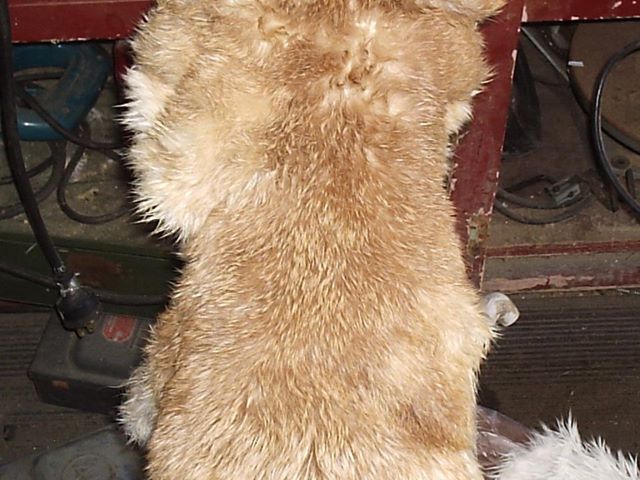
Crème d argent pelt
Rabbit pelts have been used for many years as fur, in the manufacture of felt, and for a variety of miscellaneous toys and other items. With the development of many synthetic fibers and imitation furs, the demand for pelts by furriers has decreased. Today there are few if any market for furs in the United States and is considered a waste product in many a commercial slaughter house.
Whether the pelts from meat slaughtering should be saved and prepared for marketing will depend upon the market demand and value, the type and number of rabbits being slaughtered and the time and facilities available for preparing the pelts. It is unlikely that the small homesteader slaughtering his own rabbits will find it worthwhile to process the skins for sale. But for the homesteader this waste product is a value worth more than just monetary gain but a way toward self sufficiency a wide variety of needed items can be made with rabbit pelts
Rabbit pelts vary widely in quality and value. The different types of fur characteristics vary depending on the breed type, such as the Rex, Satins, Silver Foxes and other fur type breeds(also know as dual purpose rabbits- meat and fur) Pelts from the young of any breed are normally of poor quality and of less value than those from adult animals. The young fryers pelts are thin and can tear, but are still usable but the older rabbits make a stronger finished product. Those with dense winter coat that is not easily removed from the pelt, are most the most sought after.
Preparation of pelts for market begins with the removal at slaughter. Exercised care to avoid cuts or tears, and remove body fat that often remains attached to the pelt. As the pelts are removed, turn them inside out while still warm and moist. Place them on wire stretchers or shapers with the front leg casings on one side. Shapers can be made from No. 9 gauge galvanized wire. The shapers extend or expand the pelts to their full length, but do not stretch them out of shape. Fasten the rear legs to the ends of the wire shapers with a clothes pins or some other fastener. Some people split the pelt down the belly. This works great if you are freezing them for later use.(I do this if I am freezing them)
Hang the pelts in a well-ventilated drying area, but not in direct sunlight. After the skins are dry the wire shaper is removed. Do not use salt or other chemicals on skins, but as they are being packed for storage or shipment, naphthalene (moth crystals) or paradichloro-benzene may be placed in the packaging container as an insect repellent.
There are so many ways to tan fur, here is just one of many. Freeze the hides until you have enough to tan (I usally wait till I get 6 or more). I keep them turned inside out. This process is a salt / acid process. This works very well and makes some nice pelts for coats, hats, and my favorite blankets. Wear safety glass and rubber gloves when using this acid mix it is very dilute but will still irritate your eyes.
Tanning Rabbit Pelts
1. After dressing the rabbit, toss the raw hide (split down the belly, not cased) into a Ziploc bag and put it into the freezer. Do not salt or dry out, you don’t even have to flesh them either. When you have 6 or more, you’ll have enough to make it worth your while to tan.
2. Thaw out the frozen hides, run under warm water to remove ice.
3. Rinse well and squeeze out excess water – DO NOT WRING THEM!!! SQUEEZE ONLY!!
4. You will need: 1PLASTIC 5 GALLON BUCKET
2 LBS. ROCK SALT(OR ANY CHEAP SALT)
8OZ . BATTERY ACID (can get at any Automotive store and is cheap)
STICK OR WOODEN SPOON – for stirring
A SCRUBBED BRICK OR ROCK to hold the pelts from rising to the surface of the solution.
There are many other pickle solutions. I have use this method and am happy with it!
5. Run 1 gallon of HOT water into the bucket, add salt and stir to dissolve. Add 1 gallon of cool water (not cold). Water temp. should be about 70 degrees.
6. Slowly add acid by tipping the bucket toward you and allowing the acid to dribble down the inside into the water. Be careful not to splash liquid and stir carefully with a non-metallic spoon or stick till blended. You may want to wear rubber gloves for this. ALWAYS WEAR EYEPROTECTION! Remember the old saying when using acid and water “Water to acid prepare to be blasted” ALWAYS add the acid to water slowly not the other way around!!
7. Lower the completely thawed hides one at a time into the bucket. Submerge in liquid with the stick and slide brick or rock down the bucket upright and allow the rock or brick to settle on top to the hides. At this stage the acid is not strong enough to do any real damage to your skin but you don not want to splash it into your eyes!
8. Put a piece of plywood on top of the bucket and stash away in the garage or closet where no one will disturb it or get into it. Make sure that wherever you put it, it will stay at approx. 70 degrees. Too hot and the hides will be damaged, too cold and the tanning process will be delayed.
9. Leave the bucket alone for 1 week. Put your rubber gloves on then gently remove hides from the acid solution with the stick. Allow them to drip over the bucket then SQUEEZE to remove excess liquid. Do not take to the sink. Run under cool water and add dish detergent to remove the remaining acid mixture. Rinse and squeeze out.
10. At this point the flesh on the underside of the hide should be thickened and somewhat separated from the hide. Grasp a piece on the edge and you should be able to simply peel the flesh off, often all in one piece. Be very careful with junior hides, as they tend to be very thin and easy to tear. If the flesh is very tight on the hide, it isn’t “prime” yet and should be returned to the acid solution for a few more days.
11. After fleshing, return the hides to the acid solution and leave for another week (can be safely left for up to a year).
12. When you pull out the hides after at least a week, remove the pelts and swish them around in soapy water. Squeeze as much water out as possible. Now lay pelts over the porch railing, back step, or make a drying rack to allow the pelts to drip dry. At the first sign of drying (white patches on the flesh side), work the hides gently over the back of a chair, 2X4, fence post, rough rope ect. pulling the pelt back and forth and then pull gently till the flesh side turns white all over. Pelts can be thrown in a very cool clothes dryer and tumbled for a while to help the drying/softening process.
13. Once the hides are worked till soft and completely dry this takes LOTS OF ELBOW GREASE! If you have allowed the pelts to dry stiff without working them, toss them in a pan of water to soften and then start over with the drying/working process. It doesn’t take more than a few minutes each to work the hides to a nice suede like softness. Rub the fur side over the back of a chair also to make the fur soft and natural looking. After you are done with the tanning solution, add a couple cups of baking soda to neutralize the acid. This makes it completely safe to dispose of. Good luck!!! Let me know how you do!
I am currently writing up a post on NATURALLY TANNING RABBIT PELTS so stayed tuned. JOIN THE RABBIT REVOLOUTION! Like us on Facebook and subscribe to our blog to get all the newest post as they are posted!
Basics Of Raising Meat Rabbits On The Homestead- Part 1
 You may ask why meat rabbits? I will go over the basics for why I believe everyone should be raising meat rabbits on the homestead. I could go on forever about the benefits of raising rabbits for meat, but for quick easy convenience I will only list ten reasons why everyone should be raising rabbits. Then I will cover basics of housing, feeding, and breeding information. I will eventually get into writing more about each of these subjects in more detail, and will be writing a part 2 to this series answering any question you have on part 1 and processing your rabbits, tanning pelts, and using the best fertilizer know to man, rabbit manure! Will be posting updates on the goings on at the rabbitry! Show you our hillbilly solar powered rabbitry setup for the off grid rabbit production and more. Join The Rabbit Revolution! LIKE US ON FACEBOOK for daily updates and rabbit information.
WHY RABBITS?
1. Rabbit meat is very high in protein and very low in fat and cholesterol
2. You know were your meat comes from and the type of life the rabbit had, no medications or hormones just good tasting healthy meat
3. Rabbit are easy to raise! even working a full time job 2 does and 1 buck will only take a few minutes in the morning and evening and time on weekends to clean cages,even the youngsters can do the chores
4. Rabbits can be raised in country and suburban areas(could even be raised inside).They are quiet and clean no one will know you have your own meat supply
5. Rabbits have a high reproduction rate each doe should raise at LEAST 36 fryers a year(average 6 litters,6 fryers in each litter)and could produce even more by raising more breeding stock out of the best of your litters
6. Rabbits can be raised many different ways-colony raising,natural feeding,pasture raising ect. the rabbits will adapt and flourish with good management
7. Rabbit are easy to process takes only 15 minutes a rabbit from cage to freezer (or grill)Rabbit can be cooked many ways, any chicken recipe can be changed to use rabbit in place of chicken
8. Rabbits are very efficient-they will produce 6 pounds of meat on the same feed and water that a cow will produce 1 pound of meat.Your rabbits will be ready to butcher in 8 to 12 weeks with a 50%up to 65% dress out from live weight
9. Rabbits will grow well on food items that do not compete with food items grown for human food.Rabbits are a inexpensive way to supply good healthy meat for your family
10. Rabbits have other by-products good for the homestead.The best manure know to mankind,awesome pelts for blankets,hats, gloves and other crafts,ok that was 10 and i could list 50 more ,I could also write pages on just the added benefits of rabbits other than meat!
Housing For Rabbits-
There are many different types and styles of hutches or cages. The housing needed will depend on the climate, location and the amount of money you have available. It is not necessary to go to a big expense to build hutches. I have seen some of the best rabbits raised in hutches made from second hand lumber and some old wooden boxes. Hutches can be built to be used outdoors or put in any shed or outbuilding in your backyard as long as they are in a dry draft free environment. You should construct hutches that will allow for easy feeding, watering, and cleaning. Clean cages mean clean rabbits! Most rabbit cages are made of wire, this provides easy cleaning and they last longer than cages made of other materials. The floor wire is usually 1/2″ x 1″ and sides and tops are 1″x2″ wire. This is what they use in most commercial rabbitries.
The most common outdoor hutches are usually made of wood and wire, some with just a wooden frame with a wire cage hung inside. It is important to have protection from all predators even dogs and cats. Proper ventilation is a must when they are raised inside or out, but make sure the rabbits are not exposed to wet winds or drafts. Rabbits can withstand cold weather better than hot weather. Once your rabbits start to grow they will need to be separated make sure you have extra space available. Cage size for medium sized meat breeds are 24″W x 36″L x 18″H or 30″W x 36″L x 18″H for breeding cages, cages for bucks or young replacement breeding stock can be housed in a 24″W x 24″L x 18″H or a 24″W x 30″L x 18″H. Rabbits can be housed and raised many different ways as in a colony setting were multiple rabbits are bred and raised in pens or on pasture in rabbit tractors. It is up to you to decide how you want to raise your rabbits check out other breeders and how they raise their rabbits.
Feeding Rabbits-
Feeding rabbits is probably the most important part of raising rabbits, also the most argued. It is what controls the health and condition of the rabbit (even good genetics in rabbits cannot override a poor feeding program). Most people who begin with rabbits overfeed their herd. Feeding once a day is enough only pregnant does and growing kits need extra feed. Always feed on a regular schedule a rabbit becomes accustom to a set feeding schedule and will become agitated and restless when the schedule is not kept. A constant supply of water is a must and should be changed daily. In the winter try to change frozen crocks as much as possible, at least two times a day, once in the morning and again in the evening. When you get your rabbits be sure to ask what feed they are using try to get some of the same brand from a feed store or buy some from the breeder. If you plan to change brands make sure to mix some of the new feed with the old brand for a couple weeks before switching over to the new feed completely. Any change of diet to rabbits should be done slowly! Rabbit pellets are usually dark green in color and has the nutritional requirements to produce a healthy rabbit and excellent growth in young. Check the labels and feed as manufacturer recommends. Pellets are easy to feed and requires less labor than natural feeding or pasture management. Pellets have changed a lot in my time raising rabbits and not for the better. More corn and soy and less alfalfa based feeds are sold, most all products are waste products from mills, most are GMO grown and round up sprayed, so read your feed labels and choose your feed for your rabbits informed. There are still some good rabbit food companies out there!
Grass hay is one of the most important item in the rabbit diet, it should be fed in unlimited quantities. A rabbit fed only commercial rabbit pellets dose not get enough long fibers to keep the intestines in good working order, the long fibers of hay push things thru the gut at the right speed. Hay is also good for preventing intestinal impaction caused by ingested hair. Alfalfa or clover hays should be fed restricted as they are to rich in protein and calcium to be free fed. Fresh vegetables help keep the intestinal contents hydrated, which make them easier for the rabbit to pass. Rabbits love fresh, fragrant herbs right from the garden. If your rabbit shows any signs of stomach problems, such as runny stool take away the pellets and veggies and feed only grass hay or even straw until stools harden up.
Green feeds are the natural food of rabbits. These are rich in protein minerals and vitamins, being soft and tender they are easily digested. They should be included in your feeding program. Rabbits can be fed lots of types of greens, including lawn clippings, cabbage, kale, safe weeds (do your homework lots of good weeds for rabbits out there), waste from your vegetables from the garden, prunings from fruit trees, sweet potato vines and lots more. Any green feed not eaten should be removed from the hutch daily. Roots may be grown and used fresh or saved for feeding in the winter months such as carrots, sweet potatoes, mangles, rutabagas, turnips and beets. This is just the basics of feeding rabbits, I will do a lot more on this subject in my future posts!
Breeding Rabbits-
Rabbits of medium size (most meat breeds)are ready to breed when they reach the age of 5 to 8 months of age-some breeders go by weight not by the age of the rabbit. Many young bucks will attempt to breed as early as 3 months it is best to separate them at this age, you do not want does that young to get pregnant the young will be small and there will be few kits in the litter, it also stunts the growth rate of the doe itself. Just as important do not wait to long to breed your does or the first time they will be hard to breed. While doing your chores in the rabbitry if you notice a doe trying to nose and scratch her way into other cages or rubbing her chin on things like feeders, and crocks she’s ready to breed.
When looking at the does sexual organ if her vulva is moist and bright pink to a reddish color all the way to the tip, she is ready to breed. As the cycle is waning the vaginal opening becomes a bright purple. Rabbits are induced ovulators, meaning ovulation does not occur until the actual mating by the buck. Always take the doe to the bucks cage. Does are very territorial about their cages and will attack the visiting buck and can cause serious harm to the buck. A ratio of one buck for every 10 does is necessary, the buck may be bred up to 7 times as week effectively. The doe usually accepts(lifts her tail and raises her back end)the buck will mount her vibrate and then he will fall over to the side or even backwards, some bucks are very dramatic! Within a minute he will be right back up to repeat the mating. I usually return the doe to the bucks cage for a re breeding 6 to 12 hours after the first mating. This improves conception rate and increases the number of kits in a litter. Keep accurate records of the day you bred the doe! The does gestation time is 29 to 32 days, usally right on day 31.
You should test her for pregnancy between the 10th and 14th day after breeding. The best way is to palpate by checking the lower abdomen of the doe with your thumb and forefinger checking for nodules about the size of a marble. The other way is to take her back to the bucks cage and if she runs around growling and trying to avoid the buck she is most likely pregnant. This method is inaccurate as some does will breed again and will already be pregnant or refuse to and will not be pregnant.
The gestation period is the time from mating to kindling and is 31 to 32. The nest box should be put in the does cage on day 27 from when the doe was bred (remember those accurate records a good litter of kits on the wire and you will not be happy). Fill the nest box 1/2 to 3/4 full with nesting material such as straw (my favorite), hay, shavings, dry leaves ect. I also put some nesting material in the cage so the doe can pick up some to add to her nest box. The doe will make her nest and by the time she kindles will be pulling fur. Watch expectant does often especially if they are first time mothers, If she has her kits on the wire you can put them in the nest box as long as they have not been chilled, if they have been chilled they should be warmed immediately and put back into the box and covered with fur. If the doe has more than 8 kits you should foster them to a doe with a smaller litter, unless you know the doe to be a good producer of milk.(A doe only has 8 teats so only so many kits can eat at once).
After the doe has kindled and seems to be mellowed out it is time to check the nest box, give the doe a treat (I usually give a small piece of apple or banana) and while she is enjoying her well deserved treat check the litter, remove any dead or stunted young and put the nest box back in the cage. 8 good healthy kits have a better chance and will grow faster than a litter of 12 to 14 weak kits. It is best to check the nest boxes every day the first week and every other day after that. By checking on the kits you will see if they are eating buy their plumpness and full tummies. A doe only nurses her young one or twice a day for only 2-5 minutes. If the doe is not feeding them, place the doe in the nest box and hold her until the kits start to nurse.
The kits are born naked and blind they will grow very fast, in about 2 weeks their eyes will open and in 3 weeks will start to leave the nest box. You can wean the kits from 4 weeks at the earliest and at the latest 8 weeks depending or your breeding cycle. It is important to keep the doe and kits on full feed and plenty of fresh water to keep them all healthy. The young rabbits should weigh 4+ pounds at 8 weeks of age now it is time to slaughter and select the fastest growers for your replacement breeding stock, or to move them to grow out cages.
This has only been a basic of raising rabbits. I plan on doing a few more of this series the next will be on slaughtering – selling- and using everything from your rabbits! Also answering any questions anyone has. Thanks for reading! Rise And Shine Rabbitry, Raising Meat Rabbits To Save The World! Join The Rabbit Revolution! Like Us On Facebook and subscribe to our blog page to get the newest post as they are posted!
SATIN RABBITS- The Ultimate Dual Purpose Rabbit
One of the breed of rabbits I raise are called Satins. They are a large breed, derived from a genetic mutation in the fur of some New Zealand Whites back in the 1930’s. This mutation caused a hollow hair shaft, which gives a beautiful shine and quality to the color of the coats of this “heavyweight” breed. They come in lots of colors, and are generally calmer and easier to handle.
The Satin of today is a very different breed from the New Zealands because in order to put color on that fabulous hollow hair shaft the white NZ mutation was crossed with many other breeds, and then the body was reestablished. The Satin is genetically diversified the natural way. I have heard that the New Zealand breed has only six breeding lines!
Here’s what I did in breeding- I took great stock from very distant strains, and then bred the best I could get. By crossing the colors and the two lines they have the quality and benefits of hybrid vigor. That is when two diverse satins are crossed and unusual strength, beauty, size, or vigor is noticed in the young produced.
Satins are also a excellent meat rabbit not only for meat, but also for their awesome pelts. The hair of Satins have a hollow, luminous hair shaft that gives them a great deal of sheen. They have 12 color types, black, blue, Californian, chinchilla, chocolate, copper, opal, otter, red, Siamese, white and the broken group. The ideal weight of this breed is 9.5 -10 pounds. Satins have a high meat to bone ratio and make a 5 pound fryer well in the 8-12 week time frame.
A study was done comparing the new zealand white and th e satin. The NZW reached 5 pounds earlier than the Satin, but took 100 pounds of feed to raise 8 kits to 5 pounds. The Satins raised 8 kits to 5 pounds it took a few weeks longer but only used 85 pounds of feed. Satins are easy to breed are good mothers have 5 to 11 kits in a litter and foster other kits with no problems with good milk production. If your not sure what breed is for you the Satin is a great choice for your homestead! I breed blacks,blues and Chocolates and have been selectively breeding these for winter production and am happy with the results!
COMFREY FOR RABBITS
COMFREY
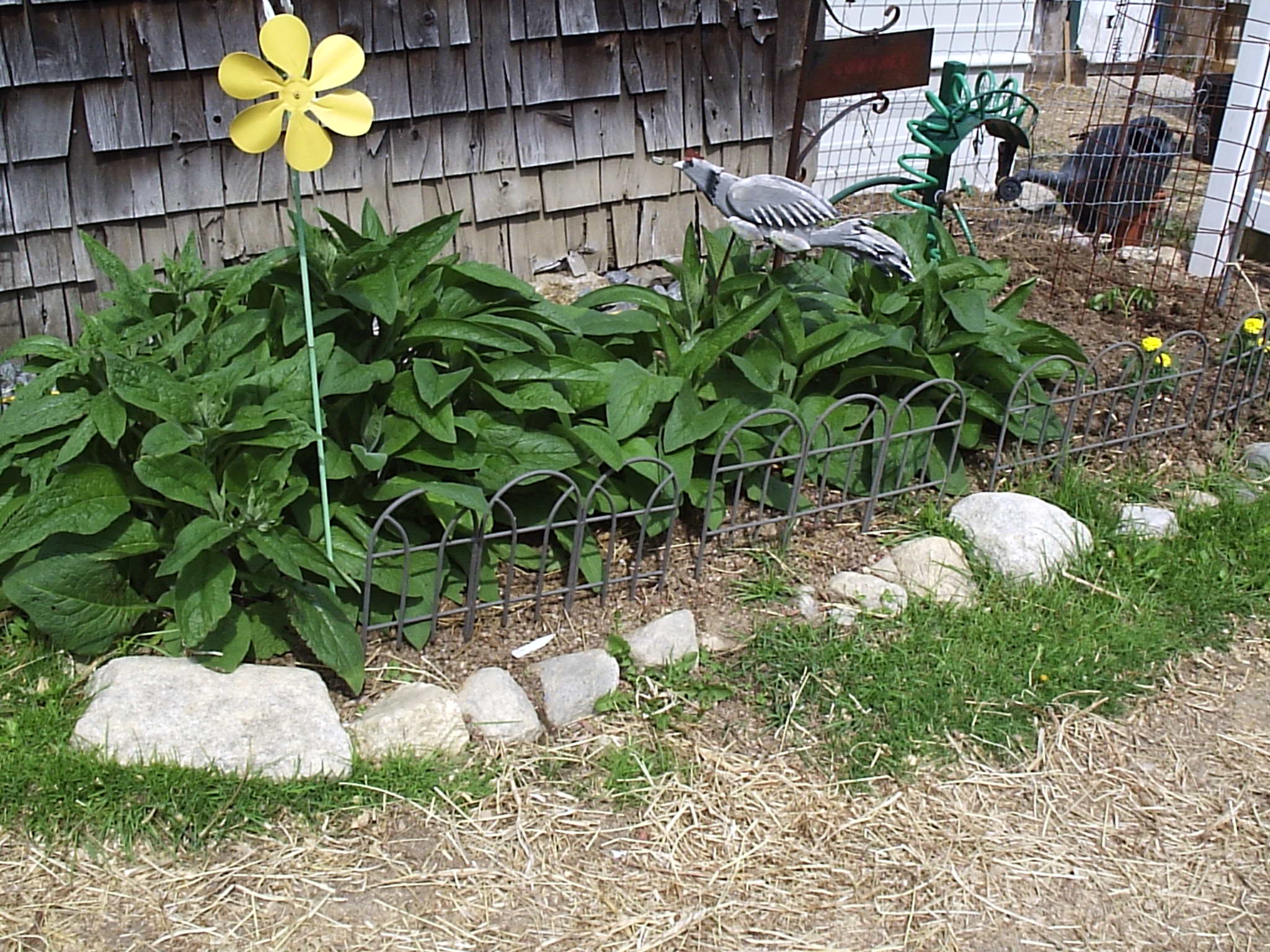
I have been using Comfrey as a food source and tonic for a long time in my rabbitry.
When I was young I always talked to all the old-timer rabbit breeders around my neighborhood and on my paper route. They all agreed and swore by comfrey as the best rabbit tonic and said every rabbit breeder should grow it.
They would give a little each day added to their daily green feed, and told me this is why their rabbits never got sick. They told me it would prevent everything from snuffles to premature kindling and helping milking does produce more milk. I have no scientific proof, other than never seeing any of their rabbits sick.
So that’s when I got my first few comfrey plants (cost me a weeks worth of newspapers) and I have been feeding comfrey to my rabbits ever since. I have moved many times from my childhood home but have always brought comfrey cuttings with me to plant more.
I know that my rabbits love the stuff just by their reaction when harvesting the comfrey, the rabbits hear me cutting the leaves in the comfrey beds, I can hear them running and binkying around their cages knowing their healthy tonic is on the way.
When entering the rabbitry with a basketful of comfrey, the whole herd comes alive waiting for their treat. I highly recommend comfrey for rabbits! It is a great digestive aid and will help with wool block, do not overfeed as it may cause diarrhea, this is the plant working use caution! Great as a tonic and added food source but not as the only feed source.
You can cut it down and dry it like hay to store for winter use ( It can be cut down up to three times here in Maine). They also love the freshly harvested leaves. The plant has a calming effect on rabbits, also good when a rabbit is off feed, It will get them back on it!
Comfrey is a great source of vitamin A and good for pregnant and nursing does as it also supports the immune system. Comfrey is good for the stomach, and can be fed as a general gut tonic. Always use caution when feeding greens to rabbits! Being extremey potent comfrey can have negative effects if overfed, and can cause diarrhea. When I do feed, it makes up about 25% of the basket of greens/weeds I pick every other day or so in the Spring/Summer/Fall. There are so many other uses for comfrey on the homestead. I will list just a few.
Comfrey has long been used as a cure by Gypsies and peasant people for ever, it has an ancient reputation as a mender of broken bones! It has also been recommended for uterine and other internal hemorrhages and for the healing of wounds. Comfrey’s power to heal wounds is credited to a substance in the plant called allantoin (listed in Merck’s Index of Chemicals and Drugs for its use in skin ulcer therapy). The most common medicinal use of comfrey is in poultices to help heal swellings, inflammations and sores.
To make such a dressing, let the leaves mush up in hot water, squeeze out the excess liquid and wrap several handfuls of the hot, softened foliage in a clean cloth. Apply the pad to the affected part—comfortably hot, but not scalding—and cover the area with a thick folded towel to keep the heat in. The moist warmth enhances the healing effect of the allantoin. Roots and Leaves have historically been used to apply to swellings, sprains, bruises, cuts and used as a poultice for stings, abrasions, blisters, abscesses and boils. Comfrey is also widely known for healing and clearing up skin problems. You can use the roots to make decoctions, and the leaves to make infusions that have antiseptic properties
British Gypsies would also feed the roots to their animals as a spring tonic. On my homestead all the livestock love it! The pigs go nuts when I throw it into their pens, The chickens come charging to meet me at the gate with some, And we already discussed the rabbits!
You can also condition your soil with comfrey! It’s one of the best plants for this. The leaves themselves may be buried as “instant compost” to give row crops season-long nourishment. A tea can be made with the leaves and used as a liquid fertilizer (No more Miracle Grow!). You should google the uses of comfrey in the garden you will be amazed! There is to much for me to list here maybe I will do a future post just on comfrey and the homestead!
Harvest when the foliage is 12 to 18 inches tall, we cut the leaves with a sickle by gathering a bunch together and shearing them off two inches above ground. After such a harvest, the plants will grow enough to be cut again in 10 to 30 days. About two weeks is the average in our experience. Dry the harvest or feed it fresh! The thicker stalks are had to dry and mold before drying, so for drying stick to the leaves.
Comfrey is 86.6%water,2.6%protein,1.8% fiber.
Comfrey is a controversial plant yet it has been used medicinally for at least 2000 years.
It has also had extensive use as an animal feed just as long. Due to recent evaluations of this plant, it is important to learn about it before deciding whether or not to add it to your rabbits’ diet. I have used it before any of the studies and still use it to this day wit no ill effects! It irritates me how negative weighted research can affect the truth of an herb.
There are three main varieties of Comfrey grown, Russian Comfrey(bocking strains), Prickly Comfrey, and Common Comfrey. Common Comfrey is the one usually grown here in the US. These Comfrey plants greatly differ in the amount of alkaloids present in the plants.
I grow and sell the Russian Bocking 14 type.
The research was done on young rats that were injected not fed naturally the whole food product. It is known that injecting a substance will often give a toxic reaction when just eating it does not. This test did cause tumors in the liver, but it was basically an overdose of the toxic part of the comfrey injected into young rats than are sensitive to the alkaloid to begin with. That is a negative weighted research project to say the least!
Despite the controversy over Comfrey and liver toxicity, farmers in both Japan and in the Pacific Northwest plant fields of comfrey to feed both their dairy and beef cattle. These farmers are getting remarkable results in the health of both their beef cattle and increased milk production in their dairy herds.
If comfrey is so dangerous, then why then is it not causing liver toxicity in these cattle? They are being fed enough to cause liver problems. There has been no problem with liver toxicity in their herds.
So if you question the use of comfrey in your rabbitry do your research. I have butchered many rabbits and have never found any internal issues with the feeding of comfrey over long periods of time.
We have Comfrey plants, roots, and crowns available in season(May till end of October ere in Maine.)
JOIN THE RABBIT REVOLUTION! Like Us On Facebook and subscribe to the website for updates and post as the become available.
 Rise and Shine Rabbitry